
About the Project
Stacking Page
The I-5 Rose Quarter Improvement Project is located in the historic Albina neighborhood of Portland. As the heart of Portland's Black community, Albina's rich history is full of stories, people and culture that continue to shape the city as we know it today. In line with the values of this project, this page presents an overview of valuable and important moments throughout the history of Albina.
Introduction
The City of Albina was incorporated in 1887. Early European settlers included primarily Irish, German and Scandinavian immigrants. Once Albina merged with Portland in 1891, it became the city's industrial hub and home for a growing number of immigrant families to settle and find work. Because of Oregon's state constitution "exclusion law," which prohibited Black people from entering or residing in the state, few Black residents lived in Portland during this time.
Although the exclusion clause remained in the constitution until 1926, there was a small population of Black residents in Portland who primarily worked in the rail and service industries. Many settled near the Union Pacific Railroad station, or in NW Portland near the Golden West Hotel. The Great Depression forced many to start building a tight-knit community in lower Albina, which is now known as the Lloyd, Eliot and Boise neighborhoods.
Aerial view of lower Albina in 1928 Photo Credit: Portland City Archives
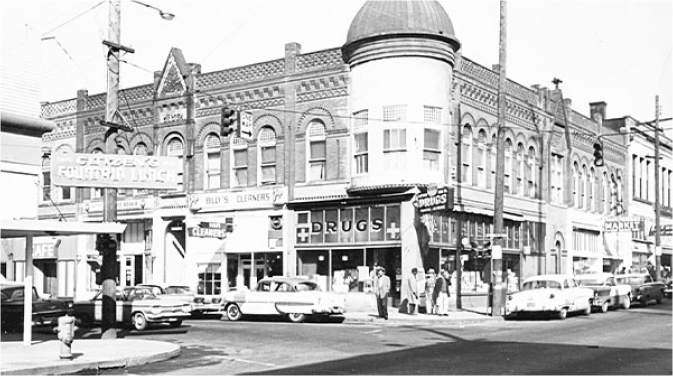
An old black and white photo